
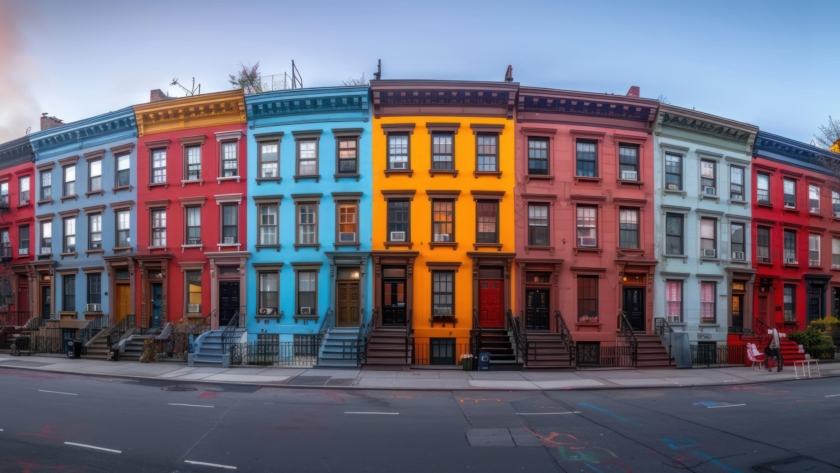
When Paula Fox, the acclaimed author of Desperate Characters (1970), sold the film rights to her novel, she didn’t splurge on luxury or travel. Instead, she invested the earnings in a piece of Brooklyn history — a narrow, four-story brownstone tucked in the quiet, tree-lined streets of Cobble Hill. Measuring just 12.5 feet wide and about 2,400 square feet in total, the townhouse may seem modest by some standards, but it exuded character and literary charm.
Fox lived there for decades with her husband, Martin Greenberg, a respected literary critic and translator. Her writing space was purposefully humble: a top-floor study where she pointed her typewriter not toward the garden view, but instead toward a wardrobe — a deliberate choice to avoid distraction and focus on her craft. It was in this home that she composed, reflected, and built a quiet legacy. The couple remained there until Paula’s death in 2017, and Martin’s in 2021.
When the brownstone eventually went up for sale, it caught the attention of a young actor couple living nearby. They had spent nearly a decade in a one-bedroom apartment and were now ready for a space to grow with their family. With two young children in tow, the idea of moving into a storied home once inhabited by literary royalty was too tempting to pass up.
Stepping into the 1899 townhouse was like walking into a novel itself. They were enchanted by the Fox-Greenberg touch: soft floral wallpapers, faded hues, and a comforting not-quite-white paint that wrapped the rooms in warmth. The house had personality, soul — and just enough room for a modern refresh. With hopes of adding a new kitchen and an extra half-bathroom, they enlisted designer Nick Spain to guide the transformation.
Spain, 37, known for his thoughtful mix of styles and residential work across Brooklyn and Massachusetts, immediately connected with the couple’s vision. In early consultations, they traded artistic references: lush 16th-century paintings like Hieronymus Bosch’s The Garden of Earthly Delights and Hans Holbein’s The Ambassadors stood beside cinematic inspirations drawn from gritty, authentic New York films of the late ’70s and ’80s — Kramer vs. Kramer, Moonstruck.
Spain, who has a background in theater and set design, approached the renovation as a curated production. The central question guiding the design became: How can we reimagine rich ornamentation and classic detail in a way that feels streamlined and modern?
He borrowed color inspiration from oil-painted masterpieces, subtly echoing their rich tones and textures. The Italianate features of the home — carved moldings, ceiling medallions, and arched doorways — were not stripped down but thoughtfully elevated. The aesthetic walked a fine line: opulent, but never flashy; refined, yet deeply personal.
From the films, Spain borrowed a love of imperfection — the lived-in feeling that makes a home feel timeless. Layered textures, slightly worn finishes, and the patina of stories long lived infused the renovation with warmth and authenticity. The result? A space that honors its literary past while embracing a vibrant new chapter — a sanctuary where color, character, and craft meet in a perfect, imperfect harmony.